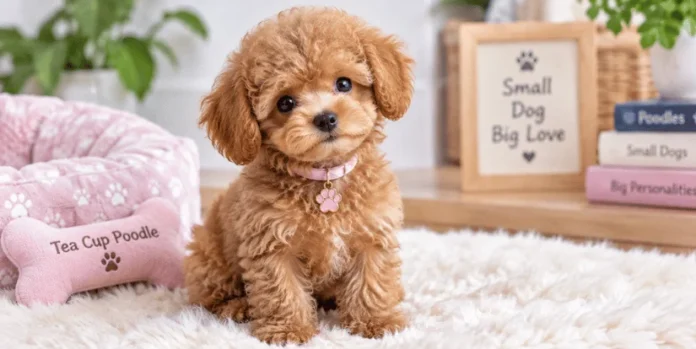
Tiny curly dogs can look irresistible, but their size deserves more attention than their photographs suggest. If you’re researching a tea cup poodle, start by understanding what the name actually means. Health, breeding practices, and daily safety matter much more than achieving the smallest possible adult dog.
Direct answer: A teacup-labeled dog is usually an unusually small Toy variety, not a separate AKC-recognized breed. AKC recognizes Standard, Miniature, and Toy sizes, with Toy dogs measuring 10 inches or less at the shoulder. Extreme smallness can increase fragility, so health testing matters more than a promised adult weight.
| Key fact | What U.S. owners should know |
|---|---|
| Official breed status | “Teacup” is not an AKC-recognized size. |
| Smallest recognized variety | Toy, measuring 10 inches or less at the shoulder |
| Typical Toy weight | About 4–6 pounds |
| Temperament | Intelligent, active, trainable, and people-focused |
| Coat | Curly, low-shedding, and grooming-intensive |
| Important health screening | PRA DNA testing, annual eye exams, and patella evaluation |
| Main buying concern | Breeding for extreme size can increase health and welfare concerns. |
| Best priority | Documented health testing before color, price, or promised adult size |
The AKC breed standard defines Toy dogs by height, while AKC reference material lists a typical 4–6-pound weight range. The label “teacup” has no equivalent official standard. That means sellers can use the term differently, making documentation especially important.
Key Takeaways
- “Teacup” is an informal marketing description, not a fourth AKC size.
- The recognized Toy variety already stands 10 inches or less at the shoulder.
- Extremely small dogs can face greater risks from falls, injuries, dental crowding, and other health problems.
- Ask for documented parental health testing rather than accepting size claims alone.
- Regular coat care, dental care, training, exercise, and veterinary attention remain necessary.
- Price does not prove that a breeder follows responsible health practices.
- Homes with rough play or a high risk of accidental falls require extra consideration.
Is a Tea Cup Poodle an Official Breed?
The American Kennel Club recognizes three sizes: Standard, Miniature, and Toy. Its breed standard places the Toy variety at 10 inches or less. It does not create a separate teacup category.
Veterinary-reviewed PetMD also describes “teacup” as a term for unusually small dogs rather than a recognized size. It warns that breeding primarily for extreme smallness can create welfare concerns. Buyers should therefore treat the label as marketing, not certification.
This distinction affects how you evaluate puppies and breeders. A promised label tells you little about adult health or final size. Parentage, veterinary records, testing, and breeding practices provide more useful evidence.
How Small Do These Dogs Get?
There is no universally accepted teacup height or weight because no official standard exists. Online sellers often describe dogs below ordinary Toy measurements with that label. Those definitions can change considerably between breeders.
For comparison, AKC materials place Toy dogs at 10 inches or less. AKC also lists their typical weight at approximately 4–6 pounds. These recognized measurements provide a clearer benchmark than an unofficial seller-created category.
Be cautious with guarantees promising an exceptionally tiny adult weight. Growth depends on genetics, nutrition, development, and individual variation. An unusually small puppy is not automatically healthier or more valuable.
Temperament and Everyday Personality
Small size does not remove the breed’s need for activity and mental stimulation. AKC describes these dogs as intelligent, active, adaptable, and responsive to their owners. They can learn quickly when training stays consistent and positive.
That intelligence can make them entertaining companions in smaller homes. It can also produce boredom when daily routines lack play or training. Short walks, gentle games, and puzzle activities can provide useful mental exercise.
Early socialization also matters for confidence around people, sounds, handling, and suitable animals. Keep experiences controlled because an undersized puppy can be physically vulnerable. ENF Blogs’ puppy development guide provides additional context on early canine movement and development.
Health Risks Owners Should Understand
Toy dogs already have several health concerns worth discussing with a veterinarian. PetMD lists patellar luxation, dental problems, cataracts, and progressive retinal atrophy among important issues. Dogs bred for unusually small bodies may face added concerns related to physical fragility.
The Poodle Club of America recommends specific screening for breeding Toy dogs. Recommended checks include a PRA-prcd DNA test, a yearly specialist eye examination, and a patellar luxation evaluation. Responsible breeders should be prepared to discuss these results clearly.
Extremely small puppies also require sensible household safety. A fall that seems minor for a larger dog can have greater consequences here. Furniture access, stairs, active children, and larger pets all deserve careful management.
Dental care should begin early because small jaws can create crowded teeth. Regular home brushing and professional veterinary assessment can help identify problems sooner. Your veterinarian can recommend an appropriate schedule for the individual dog.
Daily Care, Grooming, and Exercise
A tiny body does not mean effortless ownership. These dogs still need grooming, training, enrichment, preventive care, and suitable exercise. A predictable routine also helps owners notice appetite or behavior changes quickly.
Useful daily and weekly priorities include:
- Provide veterinarian-recommended meals suited to age and body condition.
- Keep clean water available throughout the day.
- Use safe flooring that provides traction.
- Prevent unsupervised jumping from high furniture.
- Brush the curly coat frequently enough to prevent matting.
- Introduce tooth brushing gradually and positively.
- Provide short training sessions and controlled play.
- Schedule professional grooming according to coat length and condition.
The curly coat grows continuously and needs consistent maintenance. Regular brushing helps reduce tangles before they become painful mats. ENF Blogs also has curly-dog haircut and grooming ideas that can help owners understand coat-maintenance concepts.
Exercise should suit the dog rather than its appearance. AKC describes the breed as active despite its small dimensions. Several short activities may fit a tiny companion better than strenuous adventures.
What Does Ownership Cost in the United States?
Purchase prices vary widely because “teacup” has no official breeding standard. Current U.S.-facing guides often advertise puppies for several thousand dollars. A higher price alone does not demonstrate better health or more responsible breeding.
The purchase price is also only one ownership expense. Budget for examinations, vaccinations, grooming, dental care, supplies, food, training, and unexpected veterinary treatment. Small food bills do not necessarily mean low lifetime healthcare costs.
Some owners consider insurance because accidents and illness can become expensive. Policy exclusions, waiting periods, deductibles, and reimbursement rules vary significantly. The ENF Blogs’ pet insurance pros and cons guide can help you compare that option before enrollment.
How to Screen a Breeder Carefully
Start with health evidence instead of photographs or claims about miniature size. Ask what testing was completed on both parents and request documentation. Compare the paperwork with parent-club recommendations rather than relying on verbal assurances.
Questions worth asking include:
- Can I see documented PRA testing for both parents?
- Have the parents received current specialist eye examinations?
- Have both parents received patellar evaluations?
- Can I meet the mother or see her during a live video call?
- What are the parents’ measured adult sizes?
- Can I review the puppy’s veterinary records?
- What does the written contract cover?
- What happens if I cannot keep the dog?
- How has the puppy been socialized before placement?
- Can my veterinarian examine the puppy soon after arrival?
The Poodle Club of America publishes health-testing guidance that gives buyers a useful starting point. Health-focused breeders should welcome informed questions rather than discourage them.
Avoid letting color, fashionable terminology, or guaranteed extreme size drive the decision. Those features do not replace sound structure and health screening. A breeder focused mainly on producing the smallest possible puppy deserves closer scrutiny.
Is This Tiny Dog Right for Your Household?
A small companion can suit apartment life because it needs little physical space. Yet its small body may require more supervision than owners expect. A quiet household can be easier to manage than constant rough activity.
Families with young children should consider accidental injury risks carefully. Larger energetic dogs may also cause injury without aggressive intent. Every household should assess supervision, handling, schedules, and veterinary budget before committing.
Owners should also consider the long-term grooming requirement. Low shedding does not mean a maintenance-free coat. Regular professional trimming may become part of the household budget for many years.
Frequently Asked Questions
How big does a teacup poodle get?
There is no official measurement because “teacup” is not an AKC category. The recognized Toy variety measures 10 inches or less at the shoulder. AKC reference information gives its typical weight as roughly 4–6 pounds.
Is a teacup dog smaller than a Toy variety?
Sellers generally use “teacup” for dogs expected to remain unusually small. The term has no consistent regulatory or kennel-club definition. Comparing documented parent sizes is more useful than comparing marketing labels.
How long do these small dogs live?
AKC gives the recognized Toy variety a broad life expectancy of 10–18 years. An unofficial smaller dog cannot be assigned one reliable lifespan from its label alone. Genetics, breeding quality, healthcare, injury prevention, and individual disease strongly affect longevity.
Do they shed?
Their curly coats generally shed much less visibly than many common dog coats. That advantage comes with substantial brushing and clipping needs. No dog should be considered completely allergen-free for every person.
Are these dogs good for apartments?
Their physical size can work well in apartments and compact homes. They still require exercise, training, enrichment, and regular interaction. Barking also needs attention in training when neighbors share walls.
What health tests should a breeder provide?
The parent club recommends PRA-prcd DNA testing for Toy breeding stock. It also recommends annual specialist eye examinations and patellar evaluations. Ask for verifiable results before discussing deposits or pickup dates.
Choose Health Before Extreme Size
Tiny size can be appealing, but responsible ownership starts with health and temperament. Verify testing, examine the home environment, and arrange independent veterinary care. Those steps provide more protection than any label promising an exceptionally small adult dog.
If you’re still comparing breeds or preparing for a new pet, continue with the ENF Blogs Pets section. Use those resources alongside advice from your veterinarian and recognized breed organizations. A well-researched choice gives both you and your future companion a stronger start.