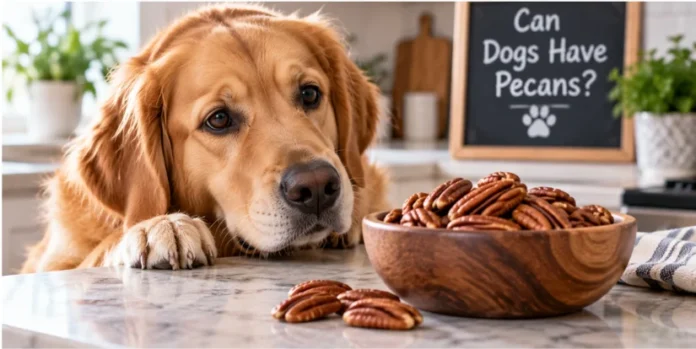
If you’re asking can dogs have pecans, the safest answer is no. A stolen fresh kernel may cause no serious problem in some dogs. Still, these nuts aren’t recommended because they carry several avoidable risks.
Direct answer: Dogs should not be intentionally fed this nut. A fresh, shelled kernel may cause little trouble, but larger amounts raise digestive and pancreatitis concerns. Mold, shells, and mixed desserts add more serious risks, including choking, blockage, tremors, or seizures. Contact a veterinarian when the exposure or symptoms concern you.
| Can Dogs Have Pecans | Main concern | Recommended response |
|---|---|---|
| One fresh, shelled kernel | Mild stomach upset may occur. | Monitor closely and contact your vet if symptoms develop. |
| Several kernels | High fat and digestive upset | Call your veterinarian for individualized advice. |
| Moldy or spoiled nuts | Tremorgenic mycotoxins | Contact a veterinarian or poison service promptly. |
| Shells or whole nuts swallowed | Choking or intestinal blockage | Seek veterinary guidance. |
| Pecan pie or candy | Fat, sugar, and possible toxic ingredients | Check ingredients and call if the amount is concerning. |
| Tremors, seizures, repeated vomiting | Potential emergency | Seek urgent veterinary care. |
Key takeaways
- Don’t offer this nut as a dog treat.
- Fresh kernels and moldy yard nuts do not carry the same level of risk.
- High fat can cause vomiting, diarrhea, and pancreatitis in susceptible animals.
- Mold toxins can cause tremors, poor coordination, or seizures.
- Shell material can cause choking and intestinal blockage.
- Never induce vomiting unless a veterinarian or pet-poison expert instructs you.
Can Dogs Have Pecans Safely?
There is no practical reason to add this food to a dog’s diet. The ASPCA’s list of people foods to avoid advises that nuts, including this variety, contain substantial oils and fats. Those fats can cause vomiting, diarrhea, and potentially pancreatitis in some pets. Online explanations of direct toxicity are less consistent. The AKC cites juglone as a concern, while PetMD says fresh kernels are not inherently toxic. A veterinarian-reviewed 2026 The Webvet guide also says intrinsic poisoning from a fresh kernel is not established.
That disagreement should not be treated as permission to feed them. The confirmed risks already provide enough reason to choose another snack. Avoiding them also removes uncertainty about mold, shells, portion size, and individual sensitivity.
Why Pecan Products Can Cause Problems for Dogs
Several hazards can occur in a single exposure. The risk depends on what the dog ate, how much it ate, and the dog’s size. Existing medical conditions can also change how a veterinarian evaluates the situation.
High fat can upset the digestive system.
Tree nuts contain large amounts of fat and calories. Too much fatty food may cause vomiting, diarrhea, abdominal discomfort, or loss of appetite. Large table-scrap meals are also recognized risk factors for canine pancreatitis. Pancreatitis means inflammation of the pancreas and can become serious. Affected animals may vomit, lose interest in food, become lethargic, or show abdominal pain. Dogs with previous pancreatic problems may require extra caution around rich foods.
Mold is a more serious concern.
Old, spoiled, or ground-up nuts deserve more attention than clean, store-bought kernels. Some molds produce tremorgenic mycotoxins that affect a dog’s nervous system. Signs can include vomiting, tremors, poor coordination, elevated temperature, and seizures. Symptoms from tremorgenic toxins can begin quickly after exposure. The Merck Veterinary Manual notes that neurological signs may appear within hours. Prompt veterinary treatment becomes especially important when shaking, seizures, or abnormal movement starts.
Shells create a physical hazard.
A hard shell creates a different problem from the kernel itself. It may become lodged in the throat or digestive tract. Sharp fragments can also irritate tissues as they pass through. Small dogs and puppies may face greater obstruction concerns from large pieces. Repeated vomiting, abdominal pain, difficulty defecating, or refusal to eat all deserve veterinary attention. Breathing difficulty or active choking requires emergency care.
What Should You Do if Your Dog Ate One?
First, identify exactly what your dog swallowed. A fresh-shelled kernel creates a different situation from moldy yard material or dessert. Your dog’s weight, health history, symptoms, and maximum possible amount also matter.
- Remove the remaining food so your dog cannot eat more.
- Check whether shells, mold, seasoning, chocolate, raisins, or sweeteners were present.
- Estimate how much was eaten and when the incident happened.
- Record your dog’s approximate weight and any existing health problems.
- Watch for vomiting, diarrhea, abdominal pain, weakness, tremors, or poor coordination.
- Contact your veterinarian when the amount is large, unknown, moldy, or causing symptoms.
- Seek emergency care for seizures, breathing trouble, collapse, or severe persistent vomiting.
Do not attempt home treatments without professional advice. The Pet Poison Helpline specifically advises owners not to induce vomiting without veterinary or poison-control guidance. Incorrectly inducing vomiting can cause additional complications.
U.S. owners can contact their veterinarian, an emergency veterinary clinic, or a veterinary poison service. ASPCA Animal Poison Control lists (888) 426-4435 for suspected poison exposures. Pet Poison Helpline lists (855) 764-7661 and states that an incident fee applies.
When to Monitor and When to Call the Vet
A simple decision framework can make an accidental ingestion less confusing. One clean kernel and a bowl of spoiled nuts are not equivalent events. Symptoms should always take priority over an apparently small piece count.
| Exposure | What to do |
|---|---|
| One fresh kernel, no symptoms | Monitor closely. |
| Several kernels | Call your veterinarian for guidance. |
| Unknown quantity | Call for advice. |
| Yard-found or visibly moldy material | Call promptly. |
| Shell pieces swallowed | Contact your veterinarian. |
| Vomiting continues, or abdominal pain develops. | Seek veterinary care. |
| Tremors, seizures, collapse, or breathing trouble | Seek emergency care now. |
No universal number guarantees safety for every dog. Body size, health history, food condition, and ingredients all influence risk. A veterinarian can assess those factors more reliably than an online piece-count rule. Unexpected veterinary visits can also become expensive. ENF Blogs has a separate guide explaining whether pet insurance may be worth considering for different owners. Coverage varies, so review exclusions and waiting periods before relying on any policy.
Are Pecan Pie, Roasted Nuts, or Candied Nuts Safe?
Pecan pie is not a suitable dog treat. It combines a rich nut with butter, sugar, syrup, and other calorie-dense ingredients. Rich foods may increase digestive upset and pancreatic concerns. The ingredient list can create additional hazards. Chocolate, raisins, macadamia nuts, alcohol, or xylitol require separate toxicology assessment if present. Sugar-free desserts deserve especially careful label checking because xylitol can seriously harm dogs.
Roasting does not make a high-fat nut necessary or beneficial for a dog. Salted, seasoned, or coated versions may introduce excessive sodium or other unsuitable ingredients. Plain does not mean ideal, so a dog-safe treat remains the better choice.
Safer Treats to Offer Instead
A treat does not need to resemble a human snack to feel rewarding. Small pieces of suitable fruits or vegetables can work for many healthy dogs. Commercial treats formulated for dogs provide another simple option.
Possible alternatives include:
- Small carrot pieces
- Plain green beans
- Small apple pieces without seeds or core
- A few blueberries
- Plain cooked pumpkin
- Veterinarian-approved commercial dog treats
Introduce new foods gradually and keep portions small. Treats should complement a complete diet, not replace balanced meals. Dogs with medical conditions or prescription diets should follow their veterinarian’s feeding advice. Age also matters when choosing food size and texture. Owners caring for a young puppy can review ENF Blogs’ puppy development and first-steps guide for broader age-related care information. Younger animals may need closer supervision around dropped food and household hazards.
Preventing Accidental Nut Ingestion
Kitchen storage prevents many accidental exposures. Keep nut containers, pies, trail mixes, and baked goods behind closed doors or inside secure cabinets. Clear dropped pieces quickly when preparing food. Homes with producing trees need another layer of prevention. Regularly remove fallen nuts, shells, and decaying plant material from areas where dogs roam. Keeping pets away from compost and outdoor food waste also reduces mold-related exposure.
Household consistency matters too. Make sure children and visitors know which foods they should not share with pets. For more general animal-care reading, visit the ENF Blogs Pets section.
The Bottom Line for Dog Owners
The safest approach is to keep this nut off your dog’s regular menu. A single fresh kernel is not automatically an emergency, but mold, shells, rich recipes, and larger amounts change the situation. When symptoms appear, or the exposure seems concerning, contact your veterinarian instead of trying a home remedy.
Frequently Asked Questions
Can dogs have pecans if they are fresh and unsalted?
Fresh, unsalted pecans are less concerning than moldy, seasoned, or shell-covered material. Still, this food offers no important benefit, so there’s no need to feed it. A dog-specific treat avoids the unnecessary fat and uncertainty.
Will one pecan hurt my dog?
One fresh, shelled kernel may cause no serious effects in a healthy dog. PetMD and recent veterinarian-reviewed guidance describe small accidental exposures as lower risk. Monitor your pet and contact a veterinarian if symptoms appear.
What symptoms should I watch for?
Watch for vomiting, diarrhea, loss of appetite, lethargy, and abdominal discomfort. More serious signs include stumbling, tremors, abnormal movement, seizures, or collapse. Neurological symptoms require prompt veterinary attention.
Are nuts from a pecan tree more dangerous?
Ground-fallen nuts can become damp, old, damaged, or moldy. That makes them more concerning than clean, packaged kernels. Shell and hull material can also introduce physical hazards.
Should I make my dog vomit after eating one?
Do not induce vomiting unless a veterinary professional instructs you. The correct response depends on the food, timing, symptoms, and the dog’s medical condition. The Pet Poison Helpline warns that unnecessary vomiting can cause additional harm.
Are walnuts and macadamia nuts safe alternatives?
Macadamia nuts are toxic to dogs and should not be used as treats. Walnuts can present mold, fat, shell, and digestive concerns. Plain dog treats or suitable produce choices are simpler alternatives.