Key Takeaways
- Most compressed air waste comes from leaks, excessive pressure, poor controls, and equipment that does not match real demand.
- Efficiency depends on the entire system, including compressors, treatment equipment, storage, piping, and end-use tools.
- Leak repair, pressure optimization, and routine maintenance are often practical first steps with manageable costs.
- Monitoring power, flow, pressure, and runtime helps teams identify waste before it affects production.
Compressed air supports manufacturing, packaging, fabrication, transportation, and many other industrial operations, but it can also become a persistent source of energy waste. Facilities that want dependable performance should look beyond the compressor itself and evaluate how air is produced, treated, distributed, and used. For plants seeking local support with related production connections and equipment needs, crimp solutions Charlotte, NC may be a useful starting point.
Cutting waste does not always require replacing major equipment. In many cases, better operating habits, targeted repairs, and clearer system data can reduce unnecessary runtime while helping maintain consistent pressure and air quality. If you want to go deeper, read Conviction.
Why Compressed Air Waste Deserves Attention
Compressed air is convenient, flexible, and useful in demanding work environments. It is also expensive to create, especially when air is produced at higher-than-necessary pressure or when it escapes through leaks. Waste can show up as rising utility bills, excess heat in the compressor room, frequent cycling, pressure instability, and premature equipment wear.
A useful assessment follows the entire chain from the point of supply to the point of use. The U.S. Department of Energy offers resources on compressed air systems covering assessment tools, storage, controls, leak reduction, maintenance, and air-quality practices.
Start With A Simple System Review
Before investing in a new compressor, build a baseline of current operation. Record every compressor’s age, rated capacity, control type, operating hours, and observed loading pattern. Map the main headers, receivers, dryers, filters, drains, branch lines, and major production drops.
- Measure pressure at the compressor, the main header, and the farthest points of use.
- Review demand during production, breaks, nights, and weekends.
- Compare energy use with production schedules and shift changes.
- Identify equipment that stays energized after the work it supports has stopped.
For example, a facility may leave a large compressor running through the night to supply only a few minor leaks or an unused air drop. That idle runtime can create a steady cost with no production value.
Find And Fix Compressed Air Leaks
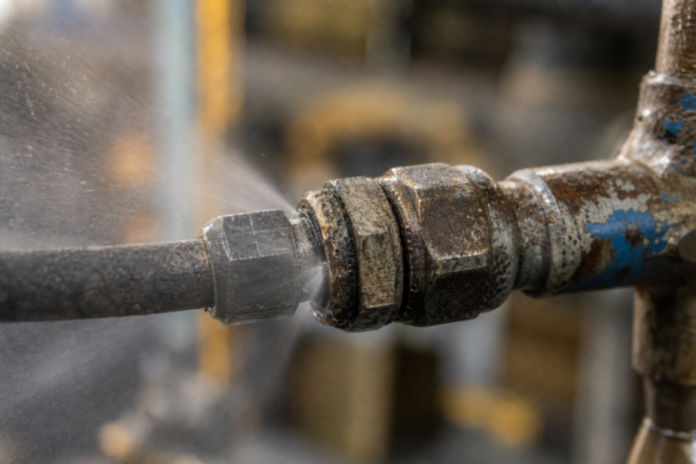
Leaks are easy to miss in loud industrial areas. Common locations include couplings, hoses, quick-connect fittings, valves, drains, regulators, threaded joints, and damaged tool connections. A visible leak is worth repairing, but hidden leaks can be more costly because they run continuously.
Use ultrasonic leak testing to identify high-frequency air loss that may not be audible over plant noise. Tag each issue with its location, estimated severity, repair date, and verification status. After repairs, repeat the test and compare off-shift demand to confirm that the system is actually using less air.
Lower Pressure Without Hurting Production
Higher pressure generally requires more energy, but pressure should never be reduced blindly. Check the minimum pressure each machine and tool needs at its actual point of use, not just at the compressor discharge.
- Investigate pressure drop caused by undersized piping, long runs, clogged filters, restrictive fittings, or worn regulators.
- Use local regulators when separate work areas need different pressure levels.
- Correct one troublesome workstation instead of raising pressure across the entire plant.
- Test pressure changes in a controlled manner and involve operators who understand the process.
Improve Compressor Controls And Sequencing
Fixed-speed compressors generally operate most efficiently near a stable load, while variable-speed compressors can better follow changing demand within an appropriate operating range. Neither option is automatically right for every facility. The best choice depends on the plant’s measured demand profile.
Poor sequencing can leave multiple compressors running unloaded, cycling excessively, or competing to respond to the same change in demand. Master controls can coordinate equipment so that one unit handles base load while another responds to changing demand. In some facilities, several properly sequenced smaller compressors offer more flexibility than one oversized machine.
Use Storage And Distribution More Effectively
Air receivers help stabilize pressure and handle short, high-demand events. They can reduce rapid cycling and give the system time to respond, but they cannot correct a major leak, an undersized compressor, or severely restricted piping.
Review pipe sizing and layout as part of the efficiency plan. Looped distribution layouts can provide multiple paths for air to reach distant areas, while adequately sized headers and branches reduce pressure drop. Plan for likely production changes rather than designing only around today’s demand.
Keep Air Clean And Dry
Moisture, oil, and particles can damage pneumatic tools, affect product quality, corrode piping, and cause maintenance issues. Dryers, filters, separators, drains, and treatment should match the process’s sensitivity. A general shop may need less treatment than precision manufacturing, food, pharmaceutical, or electronics. Clogged filters cause pressure loss and may lead operators to increase system pressure. During inspections, check filter differential pressure, ensure automatic drains work, and look for condensate where it shouldn’t be.
Build A Practical Maintenance And Monitoring Plan
- Daily: Watch for unusual heat, noise, vibration, pressure changes, and visible condensate.
- Weekly: Inspect drains, filters, hoses, fittings, alarms, and warning messages.
- Monthly: Review leaks, cooler surfaces, belts, guards, and operating trends.
- Quarterly: Check loading patterns, pressure settings, and changes in production demand.
- Annually: Complete a deeper system assessment and update improvement priorities.
Track power use, flow, pressure, temperature, runtime, and load percentage where possible. Trend data can expose gradual issues that do not trigger an immediate alarm, such as rising weekend demand or increasing unloaded hours. The Better Buildings program identifies demand reduction, lower pressure, better storage and controls, leak reduction, and maintenance as key compressed air efficiency measures.
Choose Improvements In The Right Order
- Eliminate inappropriate uses of compressed air where another method can perform the task.
- Repair leaks and damaged connections.
- Clean or replace restrictive filters and correct failed drains.
- Verify point-of-use pressure requirements.
- Improve storage, distribution, and control settings.
- Review compressor sizing, sequencing, and operating schedules.
- Consider major equipment upgrades after the system data is clear.
Common Questions About Compressed Air Efficiency
Inspect regularly, especially in continuous-operation facilities or plants with older piping. Repeat leak testing after production changes, equipment moves, or major maintenance work.
No. Oversized equipment may spend too much time unloaded or cycling. Capacity should match actual demand, required pressure, air-quality needs, and backup requirements
Storage can smooth short demand spikes and reduce unnecessary cycling. It does not replace sound controls, leak repair, or correct compressor sizing.
Conclusion: Make Efficiency A Routine Practice
Industrial compressed air efficiency comes from connected improvements, not from a single device or a large project. Repair leaks, use only the pressure required by the process, maintain treatment equipment, review data, and match supply to demand. With a clear system review and consistent follow-through, facilities can reduce operating costs, protect equipment, and support more reliable production throughout 2026.
Apart from that, if you want to know more about Types of Roofing Materials Best for Hot Climates Roof Companies near Me Recommend then visit our Home Improvement category.