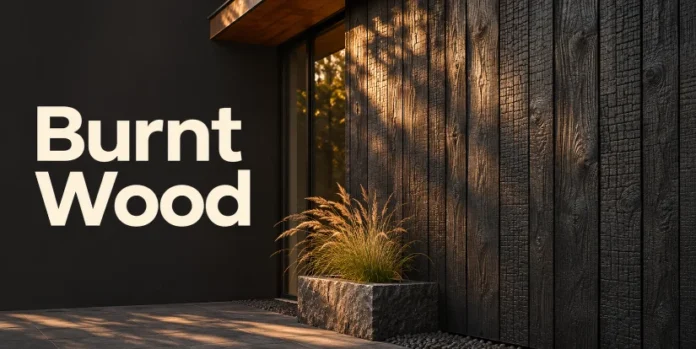
A burnt wood finish creates a dark, textured surface by carefully charring the outside of untreated lumber. The technique is closely associated with Japanese yakisugi, often called shou sugi ban in the United States. Today, homeowners use variations of the finish on siding, fences, furniture, accent walls, and smaller woodworking projects.
Charring changes the outer surface of lumber without burning through the board. Traditional yakisugi uses Japanese cedar, while modern projects use several suitable species. Good results depend on wood choice, controlled charring, proper installation, and maintenance suited to the exposure.
| Topic | Practical takeaway |
|---|---|
| Traditional name | Yakisugi, commonly called shou sugi ban in the U.S. |
| Common uses | Siding, fences, screens, furniture, and decorative panels |
| Traditional species | Japanese cedar, or sugi |
| Other possible woods | Western red cedar, cypress, larch, pine, and selected hardwoods |
| Exterior finishing | Deep char may remain unfinished, while brushed surfaces often benefit from oil. |
| Maintenance | Inspect yearly and clean gently; renew finishes when appearance or exposure requires it. |
| Lifespan | Often measured in decades, but species, climate, detailing, and installation matter. |
| Major safety rule | Never torch pressure-treated, painted, glued, or chemically treated lumber |
What Is a Burnt Wood Finish?
The basic method exposes the wood surface to intense heat until a controlled layer of char forms. Traditional yakisugi was developed for exterior wooden cladding in Japan. The Japanese term translates approximately to “burned cedar.” Traditional material usually starts with Japanese cedar, also called sugi or Cryptomeria japonica.
Modern American projects often apply similar charring techniques to locally available lumber. Those adaptations can look similar, although they aren’t always technically traditional yakisugi. Research also suggests caution around sweeping performance claims. A USDA Forest Service study found that charring did not systematically improve decay resistance or flammability across every tested product. Species, char depth, construction details, moisture management, and finish choice still influence real-world performance.
Why Homeowners Choose Charred Timber
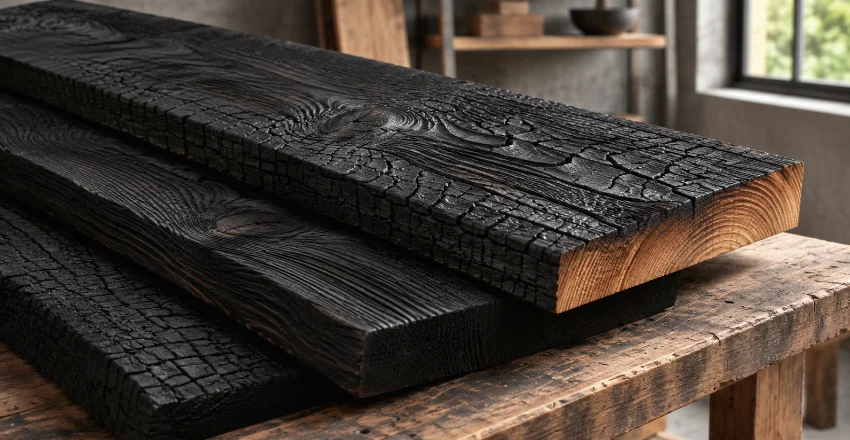
Appearance is the most immediate benefit. Charring can produce colors ranging from brown and charcoal gray to deep black. Different brushing methods can expose grain while leaving darker material inside softer growth rings. The process can also reduce the need for conventional paint on some exterior applications. Deep char shields the underlying surface from direct ultraviolet exposure while it remains intact.
Still, the char shouldn’t replace sound flashing, drainage, ventilation, or proper exterior construction. Maintenance can also be relatively simple when natural weathering is acceptable. Owners may allow deep-char siding to develop a patina instead of preserving one exact color. Brushed or oiled surfaces usually need more attention when consistent color matters.
Best Wood Species for Charring
Traditional yakisugi uses Japanese cedar because its characteristics suit the process. In the United States, availability often leads builders toward other softwoods. The best choice depends on the project’s exposure, desired texture, budget, and local supply.
| Wood species | Typical character after charring | Common applications |
|---|---|---|
| Japanese cedar | Traditional deep char with strong texture | Authentic yakisugi siding |
| Western red cedar | Lightweight with attractive grain | Siding, fencing, screens |
| Cypress | Naturally durable and stable | Exterior features and furniture |
| Larch | Dense grain with pronounced texture | Cladding and exterior boards |
| Pine | Affordable with dramatic grain | Furniture and decorative projects |
| Selected hardwoods | Smoother, varied char patterns | Interior furniture and accents |
Cedar is often practical for siding and fences because it already has useful natural decay resistance. Larch can create a harder surface and striking grain after brushing. Pine works well for experimental furniture projects, although exterior durability depends greatly on species and exposure.
Always test a scrap board before committing to an entire project. Different cuts from the same species can char differently. Moisture content, grain orientation, knots, and resin can all affect the finished appearance.
How to Make a Burnt Wood Finish Safely
Small DIY projects commonly use a propane torch, but open-flame work requires careful preparation. Do torch work outdoors on a noncombustible surface with ample clearance. Keep both a suitable fire extinguisher and a charged water source within reach. Check local fire restrictions before lighting the torch. Cities and counties may limit open flames during dry weather or burn bans.
The EPA also recommends checking local rules when using outdoor fires. Most importantly, never burn pressure-treated wood. EPA guidance warns that burning preservative-treated lumber can release harmful chemicals into smoke and ash. Avoid painted, coated, glued, composite, or unknown reclaimed lumber for the same reason.
1. Select Clean, Untreated Lumber
Start with dry lumber that has no pressure treatment, paint, stain, adhesive, or unknown coating. Inspect the boards for damage before starting. Work from a stable outdoor setup where sparks cannot reach dry vegetation or structures.
2. Char the Surface Evenly
Move the flame steadily across the board instead of holding it in one place. A light treatment darkens grain, while deeper charring creates a cracked carbon surface. Work methodically so adjoining areas receive similar heat.
3. Extinguish and Cool the Board
Make sure every glowing area is fully extinguished after heating. Allow the lumber to cool completely before brushing or handling it closely. Continue monitoring finished boards because hidden embers can remain active.
4. Brush According to the Look You Want
Deep-char siding may retain most of its carbonized surface. Furniture usually receives more brushing because loose soot isn’t desirable on touch surfaces. A stiff brush can expose contrasting grain beneath the darkest layer.
5. Clean Before Finishing
Remove loose carbon and dust from any surface that will receive oil or sealer. Don’t aggressively scrub deep-char siding unless the chosen product requires it. Excess brushing can remove the layer that creates its distinctive appearance.
6. Apply the Appropriate Finish
Use a compatible exterior oil when you want stronger color retention or less surface transfer. Interior furniture generally needs a finish that prevents soot from rubbing onto clothing and hands. Follow the coating manufacturer’s application and drying instructions.
Readers planning other hands-on upgrades can also browse ENF Blogs’ DIY foyer project ideas for additional small-project inspiration.
Using Charred Wood for Siding
Exterior siding is one of the applications most closely connected with yakisugi. Proper water management matters more than the dark surface alone. Boards need appropriate flashing, fastening, clearances, and wall assembly details for the local climate. A ventilated rainscreen can help exterior boards dry after rain. Nakamoto Forestry’s North American installation guidance emphasizes installation quality and code compliance.
The company also notes that wood siding functions as cladding rather than a waterproof barrier. Lifespan estimates should remain approximate. Commercial guidance for some cedar and larch charred-cladding systems suggests service lives around 20 to 30 years, depending on product and conditions. Other carefully designed installations may remain serviceable considerably longer, but no universal lifespan applies.
Water management elsewhere on the exterior also affects siding performance. ENF Blogs’ overview of gutter types and long-term drainage protection explains another part of keeping water away from vulnerable building surfaces.
Is Charred Wood Good for Fences?
Charred boards can make fences and privacy screens visually striking. Cedar and other naturally durable species are common candidates. A dark finish can also coordinate well with stone, steel, concrete, and modern landscaping. Fence boards face stronger weather exposure than most furniture. Sun, rain, ground splash, and vegetation can accelerate appearance changes.
Keep wooden boards away from direct soil contact unless the construction system specifically allows it. Don’t confuse charring with pressure treatment for ground-contact lumber. A surface burn doesn’t automatically make ordinary wood suitable for buried posts. Choose post materials according to structural requirements and local building practices.
Sealing Charred Wood for Furniture
Furniture needs different finishing decisions because people touch it. Loose carbon can transfer onto hands, clothing, walls, and floors. Brushed furniture usually benefits from a compatible oil, hardwax oil, or suitable clear finish. Test the coating on an offcut because clear finishes can change the color significantly. Some products deepen black tones, while others create a warmer brown appearance.
Several thin applications can offer better control than one heavy coat. For interior planning, ENF Blogs’ guide to furniture, dark accents, and room design shows how dark surfaces work with modern, industrial, and rustic interiors.
Does Charred Wood Need to Be Sealed?
Not every charred surface requires the same treatment. Traditional deep-char exterior boards may be allowed to weather naturally without regular recoating. Brushed finishes generally expose more wood and often receive oil for color control. Sealing is especially useful on furniture and other high-touch surfaces. It reduces carbon transfer and makes routine cleaning easier. Exterior oil can also slow visible weathering when maintaining a darker tone is important.
Remember that color longevity isn’t the same as structural durability. Sunlight can alter an oiled surface before the board itself has reached the end of its useful life. Expect appearance to change outdoors, even when the material remains sound.
Maintenance and Expected Lifespan
Inspect exterior boards at least once each year. Look for loose fasteners, trapped moisture, damaged char, open joints, or areas where vegetation touches the surface. Correct construction problems instead of covering them with more finish. Cleaning should stay gentle. Some manufacturers recommend rinsing with water or using mild soap and a soft brush.
Pressure washing can damage fragile carbonized surfaces, so follow the specific siding manufacturer’s instructions. Re-oiling schedules vary widely with finish type and exposure. Sunny walls may fade sooner than shaded walls. Furniture exposed to constant handling may also need touch-ups sooner than decorative wall panels.
Think of durability in rough ranges rather than guarantees. Well-selected exterior charred lumber can remain useful for decades under favorable conditions. Poor drainage, unsuitable species, or failed installation details can shorten that period substantially.
Pyrography Is Different From Yakisugi
Pyrography also uses heat, but it serves artistic marking rather than surface preservation. A heated pen burns lines, shading, lettering, or illustrations into wood. It usually affects small areas instead of carbonizing an entire board. The two techniques can still appear in the same project. A maker might char a tabletop lightly and add controlled pyrography details afterward. Each method needs its own safety precautions and finishing plan.
The “Burnt Wood” Color Trend
Dark charcoal finishes have spread beyond genuinely charred lumber. Paint, laminate, flooring, cabinetry, and furniture manufacturers now use names such as burnt oak, smoked wood, blackened timber, and carbon. Those products may imitate fire-treated material without using an actual flame process.
The look works because blackened grain retains natural texture. It feels warmer than flat black paint while still creating strong contrast. Designers often pair it with concrete, warm white walls, tan leather, brass, or natural stone.
Frequently Asked Questions
How long does burnt wood last?
There isn’t one dependable lifespan for every project. Exterior cedar or larch systems may provide service measured in decades when properly designed and maintained. Climate, installation, wood species, char depth, and moisture exposure can change the result substantially.
Is shou sugi ban the same as yakisugi?
The terms are commonly used interchangeably in the United States. Yakisugi is the established Japanese term and traditionally refers to charred Japanese cedar siding. “Shou sugi ban” became the better-known term in many English-language markets.
Can I use pine for a charred finish?
Yes, pine can produce a dramatic grain pattern after controlled charring. It is especially useful for furniture, shelves, and decorative projects. Exterior use requires closer consideration of the particular pine species and exposure.
Should charred siding be sealed?
Deep-char siding can sometimes remain unsealed when natural weathering is acceptable. Brushed products often receive oil to manage color and exposure. Follow the siding supplier’s instructions because finishing systems vary substantially.
Is charring wood fireproofing?
No. A charred surface doesn’t make ordinary lumber fireproof. USDA research found no systematic fire-performance improvement across every charred siding product tested, so applicable building codes still matter.
Final Takeaway
A charred finish can give siding, fences, and furniture a distinctive texture without hiding the natural grain. Its success depends on the complete system, including species selection, construction details, char depth, and finishing choices. Treat dramatic lifespan or fire-resistance promises cautiously unless they apply to a tested, specified product.
For DIY work, make safety the first design decision. Torch untreated lumber outdoors, keep water and an extinguisher nearby, and follow local fire restrictions. Never burn pressure-treated lumber, and stop immediately when conditions make open-flame work unsafe.