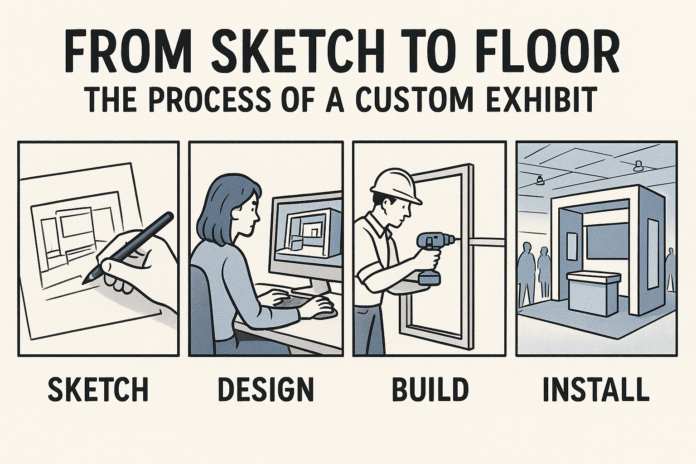
Behind every stunning trade-show display is a creative process that transforms a simple idea into a powerful brand experience. A custom exhibit isn’t just a structure — it’s an expression of your company’s story, values, and goals. From the first design sketch to the final installation on the show floor, each step requires collaboration, precision, and strategy.
If you’ve ever wondered what goes into building a custom trade-show booth, this behind-the-scenes look will walk you through the process — from concept to completion.
1. Discovery: Understanding the Brand
The journey begins with discovery. Before any sketches are drawn or materials selected, the exhibit team must fully understand your brand’s identity and objectives. This stage often involves brainstorming sessions, questionnaires, and creative consultations.
Key questions include:
- What message do you want to communicate?
- Who is your target audience?
- What products or services are you showcasing?
- How do you want visitors to feel when they step into your booth?
The answers to these questions guide every creative and technical decision that follows. By aligning the exhibit’s purpose with your marketing strategy, the design team ensures that your booth does more than look good — it performs.
2. Concept Design: From Vision to Visualization
Once your goals are clear, the design process begins. Concept sketches are created to capture the essence of your booth. These initial drawings often explore different themes, color schemes, and layout possibilities.
After feedback and refinement, designers move to 3D renderings and digital mockups. These visualizations bring the concept to life, allowing you to see your booth’s layout, lighting, and branding in full color before construction begins.
This is where creativity meets practicality. Designers consider factors like visibility from multiple angles, traffic flow, height restrictions, and booth size. The goal is to balance artistic vision with functionality and compliance.
3. Engineering and Planning
Once the concept is approved, the project transitions from creative design to engineering. Structural engineers and project managers work together to ensure that the exhibit is safe, stable, and compliant with event regulations.
Detailed CAD drawings and technical schematics are created to guide fabrication. Every connection point, light fixture, and panel is planned to ensure seamless assembly on-site. Materials are carefully chosen for durability, aesthetics, and weight efficiency.
This stage also includes logistical planning — how the booth will be shipped, stored, and reassembled at future shows. For custom booths that travel frequently, modular engineering can provide both strength and flexibility.
4. Fabrication: Turning Design into Reality
The fabrication phase is where ideas become tangible. Skilled craftsmen and builders bring the design to life using materials like aluminum, wood, acrylic, and tension fabric. Graphics are printed, lighting is wired, and each component is tested for fit and finish.
Attention to detail is everything here. A high-quality fabrication ensures that the final exhibit matches the design renderings precisely — both visually and structurally. Many exhibit companies conduct pre-show assembly in their workshop to verify that all components fit perfectly before shipping.
This “test build” stage allows the client to preview the final booth and make any last-minute adjustments before it goes live.
5. Logistics and Shipping
Once fabrication is complete, logistics take center stage. Each piece of the booth is carefully packed and labeled for transport. Logistics teams coordinate with event organizers to ensure smooth delivery to the trade-show venue.
Timing is critical — exhibits must arrive on-site within a narrow setup window. Experienced logistics planning minimizes risk, ensuring the booth is delivered safely, on time, and ready for installation.
6. Installation and Setup
The real excitement begins when the booth arrives at the show. Installation crews assemble the exhibit according to the engineering plans, using precision and speed. Lighting, flooring, AV systems, and graphics are all installed to exact specifications.
For many exhibitors, this is when the vision finally becomes real — the structure stands tall, the lights glow, and the brand’s message shines. A well-coordinated setup ensures that your booth is ready for attendees before the show doors open.
7. The Show Floor Experience
Once the show begins, your booth becomes the stage for your brand’s performance. Every design choice — from layout to lighting — plays a role in how visitors interact with your team and products.
Custom exhibits are designed to guide engagement naturally, creating spaces for product demonstrations, meetings, and memorable experiences. During the event, your booth staff’s energy and approach complete the story your design started.
8. Post-Show Breakdown and Storage
When the show ends, the teardown process begins. Installation teams disassemble the booth carefully to protect each component. Depending on your future schedule, the exhibit is either shipped to storage or sent directly to the next event.
Proper packing and maintenance ensure that your custom booth remains in excellent condition for years of use. Many exhibit companies offer on-site support, repairs, and graphics updates to keep your booth fresh and functional over time.
9. Continuous Improvement
A custom exhibit isn’t a one-time project — it’s a long-term investment. After each show, analyzing performance and feedback helps improve future designs. Did the layout support lead generation? Were visitors drawn in effectively? Could certain elements be updated to enhance impact?
By refining your booth design over time, you can continually elevate your brand’s presence and ROI at every event.
10. Bringing It All Together
The process of creating a custom exhibit is an art form that combines creativity, craftsmanship, and strategy. From the first sketch to the final installation, each stage builds toward one goal — creating a space that tells your story and inspires your audience.
Partnering with an experienced exhibit company like ExpoMarketing ensures that your vision becomes reality. Their team of designers, engineers, and project managers guide clients through every step — delivering exhibits that are not only beautiful but also built to perform.
The Final Word
A great exhibit doesn’t just appear — it’s crafted with intention. By understanding the process behind the scenes, you can appreciate how design, planning, and precision come together to create a show-stopping booth that turns heads and drives results.
Apart from that, if you are interested to know about Leading Leadership Keynote Speakers then visit our Business category.