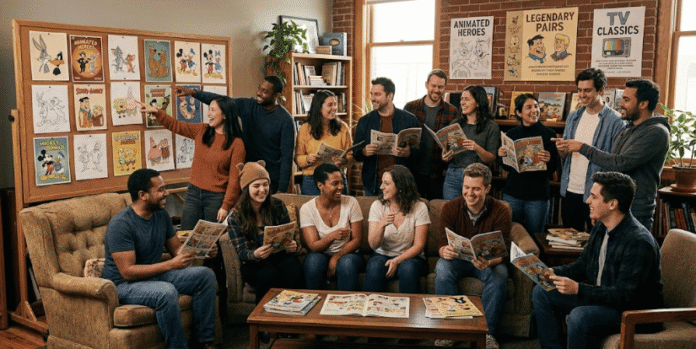
Some characters are memorable on their own, but the strongest cartoon duos become almost impossible to separate. Their friendships, rivalries, and mismatched personalities often create the stories viewers remember most. Many of these partnerships have also remained familiar across several generations.
Great animated partnerships usually combine two distinct personalities with a strong shared connection. One character may create chaos while the other restores order. That contrast produces comedy, conflict, loyalty, and memorable stories that can remain entertaining long after a show first airs.
| Animated Pair | Series or Franchise | Main Dynamic |
|---|---|---|
| Tom and Jerry | Tom and Jerry | Comic rivals |
| Scooby-Doo and Shaggy | Scooby-Doo | Best friends |
| SpongeBob and Patrick | SpongeBob SquarePants | Best friends |
| Bugs Bunny and Daffy Duck | Looney Tunes | Competitive friends |
| Woody and Buzz | Toy Story | Friends and teammates |
| Finn and Jake | Adventure Time | Adventure partners |
| Pinky and the Brain | Animaniacs / Pinky and the Brain | Opposite personalities |
| Phineas and Ferb | Phineas and Ferb | Creative brothers |
| Gumball and Darwin | The Amazing World of Gumball | Brothers and friends |
| Mordecai and Rigby | Regular Show | Chaotic friends |
Why Cartoon Duos Work So Well

Two characters give writers an easy way to create contrast. A cautious character can react to an impulsive partner. A confident hero can also depend on a nervous friend.
The strongest pairings rarely share the same personality. Their differences create jokes, disagreements, and opportunities for growth. Viewers can often recognize parts of their own friendships within those relationships.
Animation makes those contrasts even easier to exaggerate. Expressions, movement, and physical comedy can communicate personality without lengthy dialogue. That flexibility helps animated partnerships work across different age groups.
20 Iconic Animated Pairs Fans Still Remember
1. Tom and Jerry
Tom and Jerry turned a simple cat-and-mouse conflict into one of animation’s most recognizable relationships. Tom usually tries to catch Jerry, while Jerry relies on speed and clever tricks. Their physical comedy often communicates the entire story without much dialogue.
Their relationship is also more complicated than a basic rivalry. Certain stories show them cooperating when another threat appears. That changing balance keeps their conflict from becoming completely predictable.
2. Scooby-Doo and Shaggy
Scooby-Doo and Shaggy share several important qualities, including loyalty, enormous appetites, and an impressive fear of danger. They often want to escape mysteries rather than solve them. Somehow, their mistakes still help the larger group uncover answers.
Their friendship gives the franchise much of its warmth. Shaggy treats Scooby as a genuine companion rather than a simple pet. Their shared fear also makes their rare moments of courage more satisfying.
3. SpongeBob SquarePants and Patrick Star
SpongeBob and Patrick represent friendship without much concern for logic. Their adventures can begin with something ordinary and quickly become absurd. Patrick’s unpredictable thinking often makes SpongeBob’s enthusiasm even funnier.
The pair also captures the uncomplicated side of childhood friendship. They play games, argue, reconcile, and turn simple ideas into entertainment. Their chemistry remains central to many memorable Bikini Bottom stories.
4. Bugs Bunny and Daffy Duck
Bugs Bunny usually remains calm while Daffy Duck becomes increasingly frustrated. That contrast creates a reliable source of comedy. Daffy’s ambition often collides with Bugs’ effortless confidence.
They can function as rivals, partners, or reluctant companions. Their relationship changes depending on the story’s needs. That flexibility helped the characters remain effective across different animated formats.
5. Woody and Buzz Lightyear
Woody and Buzz begin the first Toy Story as competitors. Woody feels threatened by the new space-themed toy, while Buzz initially misunderstands who he is. Their difficult beginning eventually grows into mutual trust.
Later stories make their friendship central to the group’s survival. Each character brings different strengths to difficult situations. Their development shows how rivalry can gradually become loyalty.
6. Finn and Jake
Finn and Jake spend much of Adventure Time exploring strange places and facing unusual enemies. Finn brings youthful determination, while Jake often provides experience and humor. Their contrasting approaches make them effective partners.
Their relationship also feels like family because they were raised as brothers. This adds emotional depth to their friendship. Even bizarre adventures frequently return to their trust in each other.
7. Pinky and the Brain
Brain wants to conquer the world, while Pinky usually seems distracted by something completely unrelated. Their personalities could hardly be further apart. That difference drives the central joke behind their partnership.
Brain considers himself the pair’s genius. Pinky’s strange observations sometimes contain more insight than Brain expects. Their repeated failures become part of why the audience returns.
8. Phineas and Ferb
Phineas and Ferb treat summer vacation as a chance for enormous creative projects. One usually explains the idea while the quieter brother helps build it. Their cooperation makes even impossible inventions feel routine.
Their relationship contains little traditional sibling conflict. Instead, their shared creativity drives most episodes forward. This positive partnership separates them from many bickering animated siblings.
9. Gumball and Darwin
Gumball and Darwin behave like brothers, classmates, and inseparable friends. Gumball often pushes situations toward chaos. Darwin usually adds empathy, although he can join the trouble too.
Their personalities work because neither character stays locked into one role. Darwin can be sensible in one story and ridiculous in another. That variety makes their friendship feel natural.
10. Mordecai and Rigby
Mordecai and Rigby regularly turn simple responsibilities into enormous problems. Their poor decisions drive much of Regular Show’s comedy. Both characters also face consequences when their choices go too far.
Their friendship survives because they understand each other’s flaws. They argue often, but they usually reconnect afterward. That imperfect friendship feels familiar to viewers who grew up alongside them.
11. Mickey Mouse and Donald Duck
Mickey Mouse and Donald Duck bring two different temperaments together. Mickey is usually optimistic and controlled, while Donald can become frustrated quickly. Those differences create natural comic tension.
Their shared history gives them considerable recognition beyond individual cartoons. They have appeared together across television, shorts, comics, and other Disney projects. The combination remains recognizable to American audiences across generations, much like the Disney Channel stars covered in the Mia Talerico profile.
12. Batman and Robin
Batman and Robin have a mentor-and-partner relationship rather than a friendship in the comics. Batman brings experience and intense discipline. Robin often brings energy, optimism, and a different perspective.
Different animated versions adjust their relationship in distinct ways. Some emphasize Batman’s role as a teacher. Others present Robin as an increasingly independent hero who challenges his mentor.
13. Dipper and Mabel Pines
Dipper and Mabel approach the mysteries of Gravity Falls from opposite directions. Dipper investigates carefully, while Mabel follows enthusiasm and instinct. Both approaches affect their adventures.
Their sibling bond gives the series a strong emotional center. They disagree without losing their underlying loyalty. That balance makes their relationship feel stronger than a standard mystery-solving partnership.
14. Beavis and Butt-Head
Beavis and Butt-Head represent a deliberately foolish type of animated partnership. Their poor judgment creates most of their problems. They also reinforce each other’s terrible ideas instead of correcting them.
The pair became closely connected with 1990s animation and MTV culture. Their conversations often work as satire rather than traditional adventure storytelling. Their simplicity is central to the joke.
15. Ren and Stimpy
Ren and Stimpy rely heavily on extreme temperament differences. Ren can become angry and controlling, while Stimpy is cheerier and more naive. Their conflicting reactions create unpredictable comedy.
Their visual style also pushed expressions and physical reactions into exaggerated territory. That approach influenced the show’s distinctive identity. The partnership remains closely associated with 1990s animation.
16. Timon and Pumbaa
Timon and Pumbaa provide comic relief in The Lion King. Timon talks quickly and forms plans, while Pumbaa is calmer and more sincere. Their friendship gives both characters more depth than simple sidekick roles.
They also help Simba during an important part of his life. Their support shows another side of an animated partnership. Humor and genuine loyalty can occupy the same relationship.
17. Chip and Dale
Chip and Dale often compete while working toward similar goals. Chip is usually more focused, while Dale tends to act impulsively. Their small disagreements create much of their comedy.
Later interpretations expanded their personalities beyond classic shorts. Their partnership still depends on recognizable contrast. Audiences can quickly understand their relationship from how each reacts.
18. Rocky and Bullwinkle
Rocky and Bullwinkle pair a capable flying squirrel with a cheerful but clumsy moose. Rocky often recognizes danger before his friend does. Bullwinkle’s confidence usually exceeds his understanding of the situation.
Their adventures combine wordplay, satire, and exaggerated threats. The duo works because their personalities drive the story and generate the jokes. They remain an important example of American television animation.
19. Wallace and Gromit
Wallace invents complicated devices, while Gromit usually sees the problems those inventions create. Gromit cannot speak, yet his expressions communicate clear opinions. That visual storytelling strengthens the pair’s comedy.
Wallace depends on his companion more than he often realizes. Gromit’s patience repeatedly keeps situations from becoming worse. Their quiet loyalty balances the strange inventions around them.
20. Road Runner and Wile E. Coyote
Road Runner and Wile E. Coyote turn pursuit into an entire storytelling formula. The coyote creates increasingly complicated plans. The Road Runner survives them with remarkable ease.
Their episodes depend more on timing than conversation. Audiences know the basic outcome, yet the method changes constantly. That predictable structure makes each new failure part of the entertainment.
What Makes an Animated Pair Memorable?
Strong animated partnerships usually have a simple relationship viewers can understand quickly. The characters may be friends, siblings, rivals, coworkers, or enemies. Their connection should create situations that neither character could produce alone.
Contrast also matters more than constant agreement. One character’s weakness may become the other’s strength. Writers can use that difference for comedy while still developing both personalities.
Longevity helps, but age alone does not make a partnership memorable. Newer characters can connect quickly when their chemistry feels clear. Strong writing gives viewers reasons to care about both characters together.
For more television and entertainment coverage, ENF Blogs maintains a broader Entertainment section. Readers interested in performers can also explore its Christopher McDonald career profile. Streaming-focused readers can continue with its guide to Roku app development.
Classic Pairs Versus Modern Animated Friendships
Older pairings often depend on simple, repeatable premises. A chase, rivalry, or misunderstanding could generate many short stories. That structure worked especially well for theatrical shorts and early television animation.
Modern series often give relationships more development across episodes. Characters may change as friendships, family bonds, and personal goals evolve. This gives newer partnerships more room for emotional storytelling.
Neither approach automatically produces stronger characters. Tom and Jerry can work through pure physical timing. Finn and Jake can work through adventure, dialogue, and long-term character development.
Frequently Asked Questions
What are the most famous cartoon duos?
Tom and Jerry, Scooby-Doo and Shaggy, and SpongeBob and Patrick are widely recognizable examples. Bugs Bunny and Daffy Duck also remain familiar across generations. Woody and Buzz represent another major pair from animated films.
What makes a cartoon pair iconic?
An iconic pair usually has recognizable chemistry and contrasting personalities. Their relationship should create stories that depend on both characters. Longevity and cultural recognition can strengthen that connection over time.
Which animated pair is famous for rivalry?
Tom and Jerry are among animation’s most recognizable rivals. Their stories usually revolve around pursuit, tricks, and physical comedy. Their occasional cooperation adds another layer to the relationship.
Which animated characters are best friends?
Scooby-Doo and Shaggy are a classic example of animated best friends. SpongeBob and Patrick also build many stories around friendship. Finn and Jake combine friendship with a brother-like family connection.
Are famous animated pairs always friends?
No, memorable pairs can have many different relationships. Tom and Jerry are rivals, while Batman and Robin are partners. Competition can create chemistry as effectively as friendship.
Why These Pairs Keep Finding New Audiences
Great cartoon duos make relationships easy to understand without making them boring. Their personalities create conflict, humor, loyalty, and recognizable emotional patterns. That combination gives old and new viewers a reason to keep discovering them.
American animation has changed across television, theaters, cable networks, and streaming services. Strong character chemistry has remained useful through every format change. Two well-matched characters can still carry a joke, an adventure, or an entire series.
For more pop-culture coverage, readers can browse ENF Blogs’ Entertainment section after finishing this list. The site’s other film and television features offer more stories about characters and performers. Those related pages can also help readers discover additional entertainment topics.