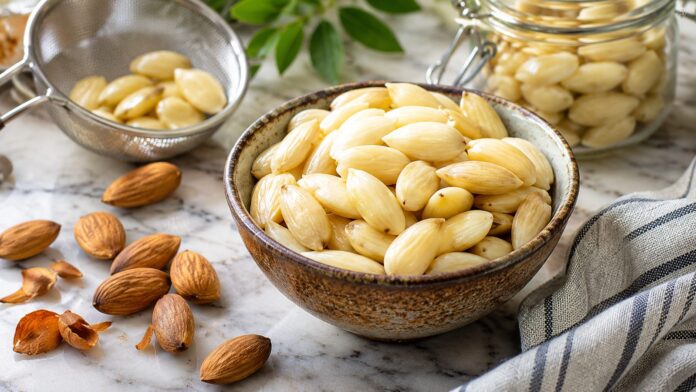
Blanched almonds are whole almonds with their thin, papery brown skins removed. A brief boil loosens the skins, allowing you to slip them off and reveal smooth, pale kernels. They’re useful in baking, desserts, sauces, homemade almond milk, and savory dishes. Understanding their different forms helps you choose the right ingredient for each recipe.
Quick Facts About Blanched Almonds
| Feature | Details |
|---|---|
| What they are | Almond kernels with their brown skins removed |
| How they’re prepared | Briefly boiled or scalded, then peeled |
| Appearance | Smooth, pale ivory or cream-colored |
| Flavor | Mild, delicate, and nutty |
| Common forms | Whole, slivered, sliced, and ground |
| Popular uses | Macarons, marzipan, baking, sauces, and garnishes |
| Storage | Airtight container in a cool, dry place, refrigerator, or freezer |
| Main nutritional components | Vitamin E, unsaturated fats, and fiber |
What Are Blanched Almonds?
These peeled kernels start as ordinary whole almonds with their natural brown skins intact. During blanching, hot water loosens the thin outer layer without requiring complicated equipment. Once cooled, the skins slide away, leaving a smooth, pale surface. The process changes the appearance and texture more than the basic identity of the nut. Removing the skin creates a cleaner finish for recipes that need a uniform color or smooth consistency. The resulting kernels also have a slightly milder flavor than their skin-on counterparts.
Why Do Recipes Call for Them?
Some recipes need a pale color without visible brown flecks. Macarons, almond paste, and certain cakes benefit from finely ground, skinless kernels. Their smooth surface also works well when blending nuts into creamy sauces or drinks. Other recipes use them because they create a more consistent appearance. Ground versions can produce a fine texture for delicate pastries and desserts. Whole versions also make attractive toppings for sweets and savory dishes.
Blanched vs. Natural, Raw, Slivered, Sliced, and Ground Almonds
Almond products can look similar on grocery shelves, but their preparation differs. Some labels describe whether the skin remains, while others describe the shape or grinding size. Knowing these differences helps prevent texture problems when following a recipe.
| Type | Main difference | Common uses |
|---|---|---|
| Blanched | Brown skin removed | Macarons, marzipan, sauces |
| Natural or raw | Brown skin remains | Snacking, cooking, general baking |
| Slivered | Cut lengthwise into narrow pieces | Pilafs, salads, toppings |
| Sliced | Cut into thin, flat pieces | Cookies, cakes, cereals |
| Blanched almond flour | Skinless kernels ground finely | Macarons, cakes, delicate baking |
| Almond meal | Usually coarser ground almonds, often with skins | Crumbles, coatings, rustic baking |
Blanched vs. Natural or Raw
Natural almonds retain their thin brown skins, while blanched versions have those skins removed. The natural variety offers a darker appearance and slightly more pronounced skin-related flavor. The peeled variety provides a lighter color and smoother finish. Raw describes an unroasted product, not whether its skin has been removed. Therefore, raw almonds can be either skin-on or blanched. Check the packaging carefully when a recipe specifies a particular preparation.
Slivered vs. Sliced
Slivered almonds are cut lengthwise into narrow, elongated pieces. Their shape makes them useful for rice dishes, salads, granola, and decorative toppings. They provide a noticeable crunch without creating large pieces. Sliced almonds are thin, flat pieces cut across the kernel. Their delicate shape works well in cookies, muffins, breakfast cereals, and cake decorations. Both forms can be sold with or without their skins.
Almond Flour vs. Almond Meal
Almond flour is generally made from finely ground, blanched kernels. It usually has a pale color and a fine consistency, making it useful for macarons and smooth baked goods. Almond meal is often coarser and may contain the brown skins. The naming conventions can vary between manufacturers, so always check the product label. Some brands use the terms interchangeably despite differences in texture. For delicate baking, choose a finely ground product specifically labeled as blanched almond flour.
How to Blanch Almonds at Home
You don’t need special kitchen equipment to prepare them. A saucepan, strainer, cold water, and clean kitchen towel are enough. The process takes only a few minutes, although peeling each kernel requires some attention.
What You’ll Need
- Whole raw almonds with skins
- A saucepan
- Enough water to cover the kernels
- A colander or fine strainer
- A bowl of cold water
- A clean kitchen towel
- An airtight storage container
Step-by-Step Instructions
- Bring water to a boil. Fill a saucepan with enough water to cover the almonds completely. Bring it to a steady boil before adding the kernels.
- Boil for about one minute. Add the almonds and let them remain in the boiling water for approximately 60 seconds. Avoid prolonged boiling because excessive heat can soften the nuts.
- Drain the water. Pour the contents into a colander or strainer. Work carefully because the water and kernels will be hot.
- Rinse with cold water. Immediately run cold water over the drained almonds. This cools them and helps loosen their papery skins.
- Pinch off the skins. Hold each kernel between your thumb and index finger. Gently squeeze one end until the skin slips away from the pale center.
- Dry the peeled kernels. Spread them across a clean kitchen towel and pat away excess moisture. Allow them to air-dry completely before storage.
- Toast if desired. Spread the dry kernels on a baking sheet and use a low oven temperature. Watch them closely and remove them once lightly toasted.
Kitchen tip: Point each almond toward a bowl when squeezing because slippery kernels can shoot out of your fingers. Working in small batches also makes peeling easier and keeps the remaining nuts manageable.
Best Ways to Use Them in Cooking and Baking
Their mild flavor and pale appearance make these kernels suitable for sweet and savory recipes. They can remain whole, become finely ground, or be cut into smaller pieces. Choose the form according to the texture your finished dish needs.
Baking and Desserts
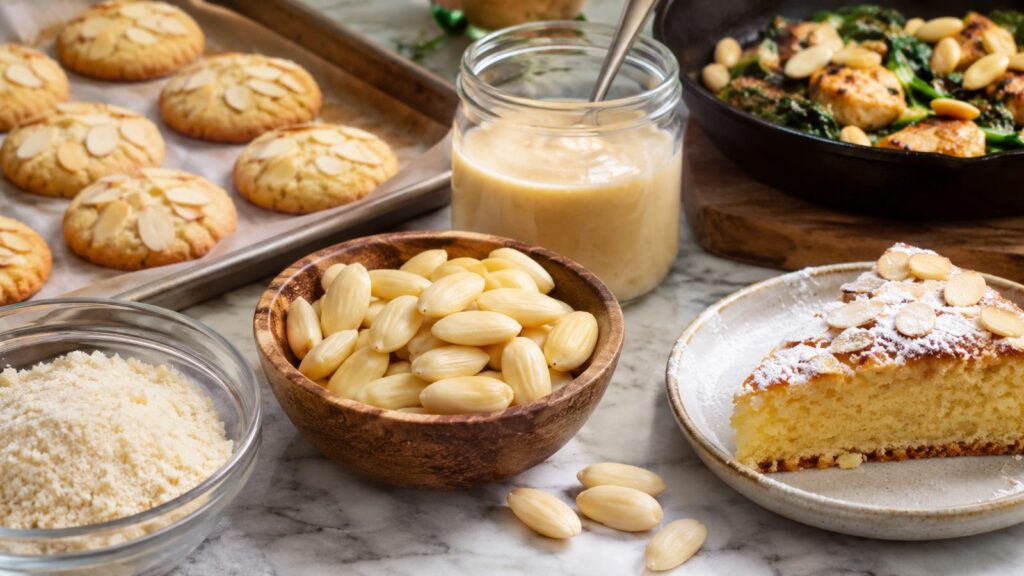
Finely ground versions are common in macarons, almond cakes, cookies, and pastries. Their light color helps create an even appearance without brown skin flecks. They’re also useful when preparing homemade marzipan and almond paste. Whole or chopped pieces can add texture to brownies, muffins, and dessert bars. Toasted pieces also make attractive toppings for puddings and cakes. For delicate recipes, use the exact grind and preparation requested.
Almond Milk and Smooth Sauces
Peeled kernels can be soaked, blended with water, and strained to make homemade almond milk. Their skinless texture helps produce a smooth-looking drink. You can adjust the water quantity depending on the consistency you prefer. They also work in creamy sauces, dips, and dressings. Blend them with suitable liquids and seasonings until the mixture reaches your preferred texture. This approach is useful in recipes that need body without visible nut pieces.
Indian and Middle Eastern Dishes
Almonds appear in several traditional sweet and savory preparations across these cuisines. Ground kernels can thicken rich sauces, while whole or slivered pieces add texture to rice dishes. They also appear in desserts, sweets, and decorative toppings. Try adding lightly toasted slivers to rice pilaf or sprinkling chopped pieces over a dessert. Ground kernels can also be incorporated into certain creamy curry preparations. Adjust the quantity to complement the spices rather than overpower them.
Garnishes and Everyday Meals
Slivered or sliced pieces make simple garnishes for salads, roasted vegetables, cereals, and yogurt. Light toasting adds a pleasant crunch and brings out their nutty aroma. Add them shortly before serving to preserve their texture. For more food inspiration, explore the ENF Blogs Food category. You can also pair nut-based toppings with desserts, including ideas from our article about pistachios in dessert platters. For shared meals, see our guide to dishes that make weekends feel festive.
How to Store Them Properly
Removing the skins doesn’t eliminate the need for careful storage. Exposure to heat, air, light, and moisture can affect freshness and flavor. Always allow freshly peeled kernels to dry completely before packing them away. Use a clean, airtight container to protect them from moisture and strong kitchen odors. A cool, dark pantry can work for short-term storage when the room stays reasonably cool. For longer storage, refrigeration or freezing helps preserve quality. Follow these practical storage habits:
- Room temperature: Keep the container sealed in a cool, dry cupboard away from sunlight.
- Refrigerator: Store in an airtight container to help maintain freshness for longer.
- Freezer: Use a sealed freezer-safe bag or container and remove excess air.
- After thawing: Allow the container to reach room temperature before opening to limit condensation.
Check the kernels before using stored batches. A stale, paint-like, or unpleasant smell can indicate that their oils have deteriorated. Discard any product showing mold, unusual moisture, or other signs of spoilage.
Simple Substitutions When You Don’t Have Them
You can often replace peeled almonds with another almond form, depending on the recipe. The main considerations are color, texture, and whether the skin affects the final result. Some substitutions work better in everyday cooking than in delicate pastries.
| Recipe calls for | Possible substitute | What to expect |
|---|---|---|
| Whole blanched almonds | Raw skin-on almonds | Darker appearance and visible skins |
| Slivered almonds | Chopped whole almonds | Similar flavor, different shape |
| Sliced almonds | Chopped or slivered almonds | Less delicate decoration |
| Blanched almond flour | Finely ground blanched almonds | Similar result if ground evenly |
| Almond meal | Ground whole almonds | Useful for rustic textures |
For macarons and other precise baked goods, avoid casual substitutions. Differences in moisture, particle size, and skin content can affect the finished texture. When possible, use the ingredient specified by the recipe. If you only have natural almonds, blanch them using the home method above. This gives you the correct peeled ingredient without purchasing another package. For toppings and savory dishes, chopped or slivered alternatives are usually easier to adapt.
Nutrition: What Do Almonds Contain?
Almonds provide vitamin E, unsaturated fats, and dietary fiber. They also contain other nutrients, including magnesium and plant-based protein. Their exact nutritional composition can vary with processing and serving size. The brown skin contains some polyphenols and contributes fiber. Removing it changes the amount of certain skin-associated compounds, but peeled kernels still contain fiber and other nutrients. For personal dietary questions, a registered dietitian can give guidance that fits your needs. Allergy note: Almonds are tree nuts and can trigger serious allergic reactions in people with tree-nut allergies.
Frequently Asked Questions
What are blanched almonds?
They are whole almond kernels with their thin brown skins removed. A short exposure to boiling water loosens the skins, making them easy to peel. The finished kernels have a smooth, pale appearance.
Are blanched almonds the same as raw almonds?
No, the terms describe different things. Raw means the almonds haven’t been roasted, while blanched means their skins have been removed. An almond can be raw and blanched at the same time.
How long should you boil almonds for blanching?
About one minute is generally sufficient for loosening the skins. Drain and rinse them with cold water immediately afterward. Longer boiling can soften the kernels unnecessarily.
Can you make blanched almonds without boiling?
Yes, pouring freshly boiled water over them can loosen their skins. However, the soaking time may vary depending on the almonds. The one-minute boiling method provides a straightforward approach for home preparation.
Can you use almond flour instead of whole blanched almonds?
It depends on the recipe. Flour works when the ingredient needs to be ground, but it cannot replace whole kernels for garnishes or textured dishes. Match the form to the recipe’s intended result.
Do the skins contain nutrients?
Yes, the brown skins contain some polyphenols and dietary fiber. Removing them reduces certain skin-associated compounds. The peeled kernels still provide vitamin E, fats, fiber, and other nutrients.
How should you store peeled almonds?
Keep them in an airtight container away from heat, light, and moisture. Refrigeration or freezing can help extend their storage life. Make sure freshly peeled kernels are completely dry before packing them.
Can you toast them after blanching?
Yes, but dry them thoroughly first. Spread them in a single layer on a baking sheet and use a low oven temperature. Check frequently because smaller pieces can brown quickly.
Final Thoughts
Peeled almonds are useful pantry ingredients for baking, desserts, sauces, and savory cooking. Their smooth appearance and mild flavor make them a practical choice when recipes need a lighter finish. With a one-minute blanching method and proper storage, you can prepare them at home whenever a recipe calls for them. Start with a small batch and try it in almond milk, baked goods, or a rice dish. Once you understand the differences between whole, sliced, slivered, and ground forms, choosing the right ingredient becomes much easier. —