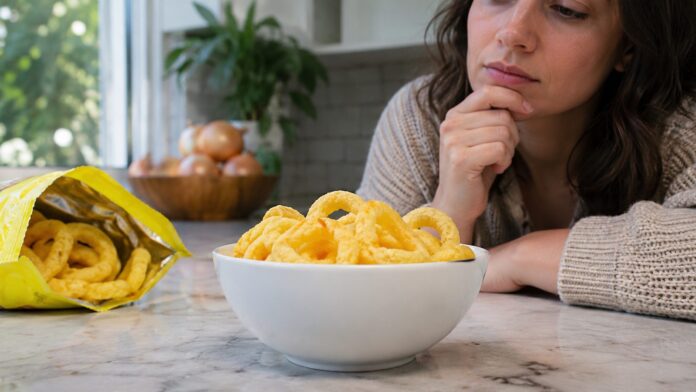
Funyuns are made mainly from corn, and their standard ingredient list does not feature wheat, rye, or barley. Still, that does not automatically make every bag suitable for someone who must strictly avoid gluten. Frito-Lay does not currently treat the product like its tested U.S. gluten-free snacks. Direct answer: Are Funyuns gluten free? They contain no obvious gluten ingredients, but they are not listed among Frito-Lay’s tested gluten-free products. That distinction matters because possible cross-contact may occur during manufacturing. People with celiac disease or strong gluten sensitivity should choose a clearly labeled gluten-free alternative.
Quick Facts About Funyuns and Gluten
| Question | Answer |
|---|---|
| Main ingredient | Corn meal |
| Wheat listed as an ingredient | No |
| Barley or rye listed | No |
| Official gluten-free claim | Not currently listed by Frito-Lay as tested gluten-free |
| Cross-contact concern | Possible |
| Best choice for celiac disease | Choose a clearly labeled gluten-free snack |
| Contains milk | Yes, Original contains buttermilk |
| U.S. gluten-free standard | Less than 20 ppm when a gluten-free claim is used |
The most important distinction is between ingredients and manufacturing controls. A snack can lack wheat while still lacking a formal gluten-free claim. That difference deserves attention when gluten avoidance is medically necessary.
Are Funyuns Gluten Free According to Frito-Lay?
Frito-Lay maintains a specific list of U.S. products it has validated through analytical gluten testing. The company says products on that list contain less than 20 parts per million. Its current Funyuns brand lineup includes Original, Flamin’ Hot, and Spicy Queso varieties. The brand page does not present those products as part of its tested gluten-free range. That makes a simple “yes” potentially misleading for sensitive shoppers. A corn-based ingredient list alone cannot answer every cross-contact question. This distinction also matches U.S. Food and Drug Administration guidance. Foods using a gluten-free claim must meet the federal requirements for that wording. Any unavoidable gluten must remain below 20 parts per million.
Why Corn-Based Snacks Can Still Raise Gluten Questions
Corn is naturally free from gluten proteins found in wheat, rye, and barley. That explains why the ingredient list may initially look reassuring. Yet processing conditions matter for people who require strict avoidance. Cross-contact happens when otherwise gluten-free food encounters gluten during production, storage, or preparation. Shared equipment can create that possibility without changing the main recipe. Cleaning procedures may reduce risk, but consumers still need manufacturer guidance. This issue is not unique to onion-flavored snacks. Packaged foods often separate ingredient information from allergen or dietary claims. Reading both parts of the label gives you a clearer picture. If you are exploring other restrictive eating patterns, ENF Blogs also covers a vegetarian keto diet guide. That article shows why ingredient checking matters when several dietary rules overlap. Similar label-reading habits are useful for gluten avoidance.
What Ingredients Are in Original Funyuns?
Original onion-flavored rings use enriched corn meal as their main base. Other ingredients include vegetable oils, seasonings, corn-derived ingredients, onion powder, garlic powder, and flavorings. The recipe also contains buttermilk, so the product contains milk. None of the familiar primary ingredients are wheat, rye, or barley. Maltodextrin in the current U.S. recipe is identified as corn-derived. The gluten concern comes from processing status rather than an obvious wheat ingredient. Recipes can change over time, though. Manufacturers may also sell different formulas in different countries. Check the current U.S. package before relying on an older online ingredient list.
What Does “Gluten-Free” Mean in the United States?
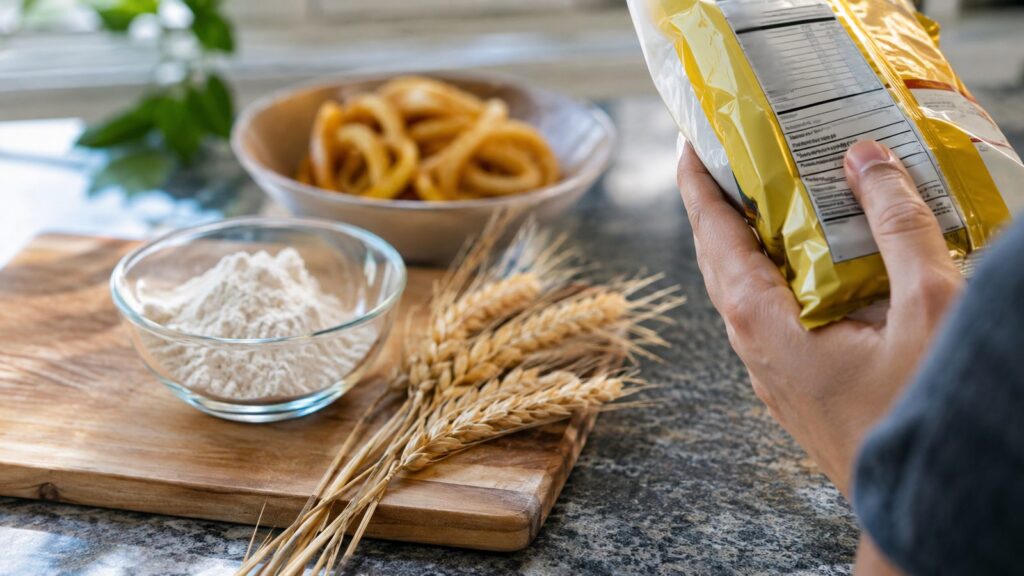
FDA rules provide a legal standard for foods that voluntarily use a gluten-free claim. Those foods cannot contain prohibited gluten-containing ingredients under the rule. Any unavoidable gluten also must remain below 20 parts per million. A manufacturer does not have to place a gluten-free claim on every suitable food. Still, the claim gives consumers an additional level of information about regulatory compliance. This distinction becomes especially useful with processed grain-based snacks. The FDA also warns consumers against assuming similar statements mean the same thing. “Made without gluten ingredients” does not automatically establish compliance without a gluten-free claim. That is why wording on the package deserves close attention.
Are They Safe for Someone With Celiac Disease?
People with celiac disease need consistent gluten avoidance. Gluten exposure triggers an autoimmune response that can damage the small intestine. For that reason, uncertain cross-contact deserves more caution than personal preference does. The Celiac Disease Foundation also stresses avoiding cross-contact during food preparation. Shared equipment, utensils, and surfaces can transfer gluten into otherwise suitable food. The same principle helps explain concerns around packaged foods without verified gluten-free status. A conservative choice is to select snacks carrying a clear gluten-free label. You can also contact the manufacturer if a package creates uncertainty. Your clinician or registered dietitian can provide individualized advice for diagnosed celiac disease.
What About Flamin’ Hot and Other Varieties?
Frito-Lay currently markets several U.S. varieties under the brand. These include Original, Flamin’ Hot, and Spicy Queso options. Flavor formulas differ, so one variety should not stand in for another. Flavored versions often contain longer seasoning lists. Those formulas can also change more frequently than a simple corn base. Check each package instead of assuming every flavor has identical dietary properties. Milk is another consideration for some shoppers. Original already contains buttermilk, while flavored products may contain additional dairy ingredients. Gluten-free and dairy-free are separate dietary claims. ENF Blogs has more nutrition-focused reading in its high-protein morning guide. It may help readers who are comparing packaged snacks with more filling meal choices. Dietary needs still vary from person to person.
How to Check a Snack Before Eating It
Packaged-food labels give you the most current product information. Recipes, factories, and dietary statements can change after an online article is published. Checking the bag takes little time and may prevent an avoidable mistake. Use this simple routine:
* Look for a clear “gluten-free” statement on the package. * Read the complete ingredient list. * Check the allergen statement for wheat. * Review any shared-equipment or facility information. * Confirm the exact flavor and package size. * Visit the manufacturer’s dietary-needs page when uncertain. * Contact the manufacturer if strict avoidance is medically necessary.
Do not rely only on the word “corn” on the front of a package. Corn-based foods can include seasonings or processing considerations that deserve review. The complete label provides much better evidence.
Gluten-Free Alternatives to Consider
If you need greater certainty, look for onion-flavored snacks carrying an explicit gluten-free claim. Certification from a recognized gluten-free program may provide another useful signal. Product availability differs between U.S. stores and regions. Plain corn chips and potato chips can also offer simple alternatives. The safest choice depends on the exact brand and flavor. Always check the individual package because seasonings can change a product’s status. You can also make crunchy snacks at home using potatoes, onions, corn tortillas, or vegetables. Home preparation gives you control over ingredients and cooking surfaces. People with celiac disease should still prevent cross-contact in the kitchen. For broader healthy-food considerations, see ENF Blogs’ guide to dietary habits and the best ways to prevent obesity. Gluten-free does not automatically mean nutritious or suitable for every eating goal. Nutrition and allergy safety should be evaluated separately.
Frequently Asked Questions
Are Funyuns gluten free in the U.S.?
The standard recipe does not show obvious wheat, barley, or rye ingredients. Frito-Lay does not currently list the snack with its analytically validated U.S. gluten-free products. People requiring strict avoidance should therefore choose an explicitly labeled alternative.
Do Funyuns contain wheat?
The current Original ingredient information is corn-based and does not list wheat as a direct ingredient. That does not eliminate every possible manufacturing concern. Always check your current package because formulas can change.
Are Funyuns safe for celiac disease?
They are not the strongest choice for someone needing strict gluten avoidance. A clearly labeled gluten-free snack provides more assurance under U.S. labeling rules. Discuss individual dietary needs with your medical professional when necessary.
Does “no gluten ingredients” mean gluten-free?
Not necessarily. The FDA treats an official gluten-free claim as a regulated statement with specific requirements. Consumers should not assume other wording provides exactly the same assurance.
Are Flamin’ Hot Funyuns gluten-free?
Do not assume the status of one flavor applies to every other flavor. Seasoning formulas differ between products. Check the newest package and Frito-Lay dietary guidance before eating them.
Are Funyuns dairy-free?
No, Original contains buttermilk and therefore contains milk. Some flavored versions contain additional dairy ingredients. Anyone avoiding milk should inspect the allergen statement carefully.
The Bottom Line
The simplest answer is that these onion rings use corn-based ingredients without obvious wheat, rye, or barley. The complication is their lack of placement on Frito-Lay’s tested U.S. gluten-free list. That distinction becomes important for anyone with celiac disease or severe sensitivity. If gluten avoidance is a preference, you can make your decision after reviewing the current package. If gluten avoidance is medically necessary, choose a product with a clear gluten-free label. Checking the latest manufacturer information remains the safest next step. —